


Do Stainless Steel Necklaces Tarnish? A Straight Answer + Complete Care Guide
Short answer: high-quality stainless steel doesn't tarnish. Here's the full explanation, plus how to care for stainless jewellery to keep it looking new for years.
You are about to click add to cart and one question stops you: is this going to turn my neck green in three weeks? Fair worry. Cheap plated jewellery has burned enough people that it deserves the caution. Here is the honest answer, no marketing spin.
Do Stainless Steel Necklaces Tarnish?
No, not if it is real stainless steel. Specifically, 316L stainless steel, the surgical-grade alloy used in medical implants and quality jewellery, is highly corrosion resistant and will not tarnish, rust, or turn your skin green under normal wear. Lower-grade 304 stainless is also solid for jewellery, though slightly less resistant than 316L. Both are dramatically better than gold-plated brass, silver-plated pot metal, or any of the cheap alloys that dominate fast fashion accessories.
Where confusion comes in: many products labelled stainless steel are actually stainless steel plated pieces, or a stainless base with a gold or rose gold PVD coating on top. The base metal is fine. The coating is what can wear over time. More on that below.
Why Stainless Steel Resists Tarnish
Stainless steel contains chromium, which reacts with oxygen in the air to form a thin, invisible protective layer on the surface. If the surface gets scratched, the chromium in the underlying steel reacts and re-forms that layer within seconds. This is why stainless steel is self-healing against corrosion in a way that silver, brass, and copper are not.
Will My Neck Turn Green?
No. Green skin comes from copper reacting with sweat, and there is no free copper in 316L stainless steel. If a stainless piece turns your neck green, it was either mislabelled or the coating has worn through to a copper-containing base underneath. Real 316L stays inert on your skin, which is why the same alloy is used in surgical instruments and body implants.
Is Stainless Steel Hypoallergenic?
Mostly yes. 316L stainless steel is considered hypoallergenic for the vast majority of people, including most who react to costume jewellery. The small percentage of people who are severely nickel-sensitive may still react to some stainless steel because most grades contain a small amount of nickel bound within the alloy. If you have confirmed nickel allergy, look specifically for nickel-free or 316L nickel-free pieces, or opt for titanium or solid gold instead.
Is Stainless Steel Waterproof?
Yes. You can shower with 316L stainless steel jewellery, swim in fresh water, sweat in it, and wash your hands with it on. It will not rust or corrode.
Two caveats:
- Saltwater and chlorinated pools are aggressive over time. The steel will not rust, but repeated exposure can dull the finish. Rinse with fresh water after ocean swims.
- Plated finishes (gold, rose gold, PVD colours) are more resistant than traditional plating but not indestructible. Frequent salt or chlorine exposure will eventually wear these coatings.
How to Care for Stainless Steel Jewellery
- Rinse after sweaty workouts or beach days. Fresh water removes salt, sweat, and residue.
- Clean with mild soap and warm water. A soft toothbrush handles the little crevices where debris collects.
- Dry it fully before storing. Water sitting in chain links does not corrode the steel but can leave mineral spots.
- Store dry. A soft pouch or the box it came in works. No need for anti-tarnish paper (that is for silver).
- Avoid harsh chemicals. Bleach, chlorine cleaners, and heavy perfumes can dull the finish or affect plated coatings.
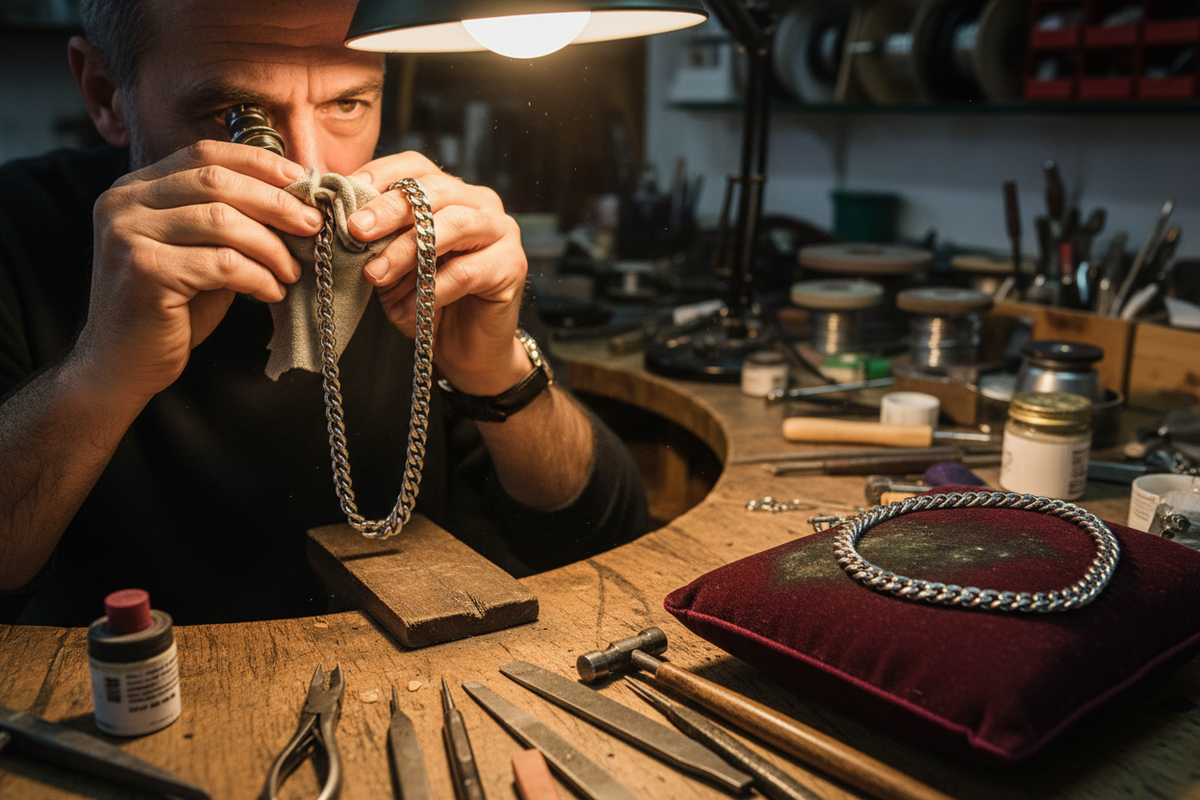
- Polish scratches with a soft cloth. Microfibre cloths bring back the shine on brushed and polished surfaces alike.
What About Plated Stainless Pieces?
Gold-plated, rose-gold-plated, and PVD-coated stainless pieces last longer than any other plated jewellery on the market, but they still have a finite life on the coating. Realistic expectations: 1 to 3 years of daily wear before you may see any wear on high-friction spots (clasps, edges). The steel underneath will not rust or turn green even after the plating wears. It just changes colour to silver.
The Charlie Dolly Standard
Where we describe a piece as stainless steel, we use 316L unless otherwise noted. Pieces marked as PVD-plated or 14K or 18K gold-plated use stainless steel as the base metal, giving you the durability of steel with the finish of gold at a fraction of solid gold's price.
A Few Reliable Everyday Pieces
Tiger Eye Square Drop Earrings, 14K Gold PVD Stainless Steel. Waterproof, hypoallergenic, no tarnish.
Fleur De Lis Saint Necklace, 316L Stainless Steel. Full surgical-grade steel, made to last.
Lotus and Unalome Chakra Pendant. Sacred symbolism in tarnish-proof steel.
Bottom Line
If you have been burned by cheap plated jewellery, 316L stainless is the fix. It handles daily wear, water, sweat, and time in a way that traditional plating cannot. The rest is basic upkeep: rinse it after sweat and saltwater, dry it before you put it away, and stop worrying about it turning your neck green. It won't.