

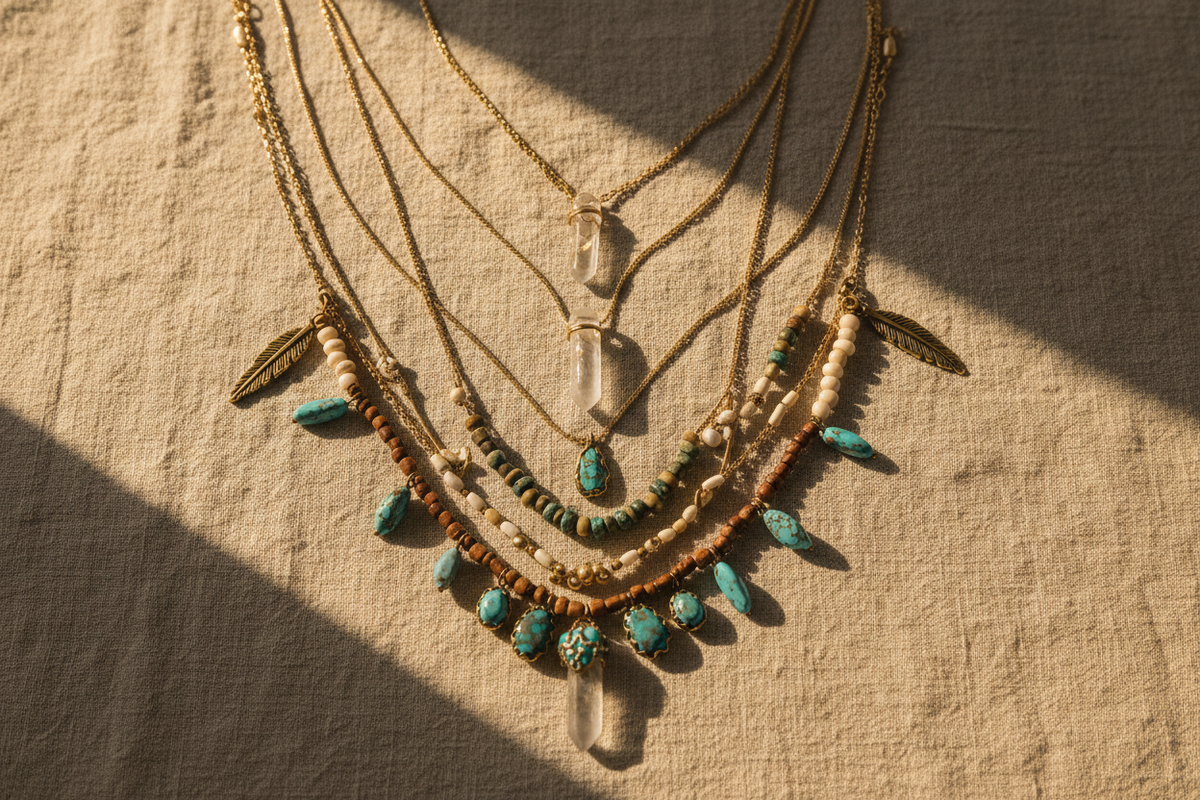


How to Care for Stainless Steel and Sterling Silver Jewelry
Why sterling silver tarnishes and stainless steel does not, how to clean both safely at home, and the everyday habits that keep gemstone jewelry looking new.
Most jewelry does not wear out. It gets dulled by perfume, scratched in a drawer, or tarnished because nobody explained what tarnish is. All three are avoidable.
Stainless steel
Stainless steel does not tarnish. The chromium in the alloy forms a thin oxide layer that reseals itself when scratched, which is why it survives water, sweat, and daily wear better than almost anything else at this price.
To clean: warm water, a drop of mild dish soap, soft cloth. Rinse, dry completely. That is genuinely the whole procedure.
What to avoid: chlorine bleach and prolonged pool exposure, which can pit the surface. Abrasive pastes and scouring pads, which leave permanent fine scratches.
Stainless steel is the sensible choice if you want to stop thinking about maintenance, and it is hypoallergenic for most people.
Sterling silver (S925)
Sterling silver is 92.5% silver and 7.5% other metals, usually copper. The copper is what gives it strength — pure silver is too soft for jewelry — and also what makes it tarnish.
Tarnish is a chemical reaction with sulphur compounds in air, skin, and household products. It is not damage and it is not a defect. It reverses completely.
To clean lightly tarnished silver: a silver polishing cloth, ten seconds of rubbing. Keep one in your jewelry box.
For heavier tarnish: warm water, mild soap, soft toothbrush for detailed areas. Rinse and dry thoroughly — trapped moisture accelerates the next round.
A caution about the foil-and-baking-soda method: it works chemically, but it strips oxidation indiscriminately. On oxidised or antiqued designs — where dark recesses are part of the intended look — it will wreck the finish. Do not use it on pieces with deliberate blackening, and never on porous or glued stones.
Slowing tarnish down
- Store silver in a closed bag or lined box with the air pushed out
- Add an anti-tarnish strip; they last about six months
- Keep silver away from rubber bands, wool, and cardboard — all release sulphur
- Wear it. Skin contact slows tarnish; a drawer accelerates it
Gold plated pieces
Plating is a thin gold layer over a base metal. It wears through eventually — that is the nature of it, not a fault.
To extend its life: put jewelry on last, after perfume, lotion, and hairspray have dried. Take it off before showering, swimming, and exercise. Wipe with a dry cloth after wearing. Never use polishing cloths or dips on plated pieces, since polishing removes the plating.
Gemstones and natural stones
Stones vary more than metals do. A few need real care:
Porous or soft stones — turquoise, opal, pearl, coral, amber, malachite. These absorb liquid and are damaged by ultrasonic cleaners, harsh chemicals, and prolonged water. Wipe with a barely damp cloth and dry immediately.
Light-sensitive stones — amethyst and rose quartz fade with prolonged direct sunlight. Do not store them on a windowsill.
Hard stones — quartz, lapis, tiger's eye, jade tolerate more, but glued settings do not. Water gets behind the stone and loosens the adhesive.
The rule that matters most
Jewelry goes on last and comes off first. Perfume, sunscreen, hairspray and lotion are the main cause of dulling on every material listed here, and they are entirely avoidable with a habit change.
Storage
Store pieces separately. Harder stones scratch softer ones, and chains tangle into knots that stress the links when you pull them apart. Individual pouches or a compartmented box will do more for your collection than any cleaning routine.
Browse our Crystal & Stone collection or the full New Arrivals to see what is available in each material.