

Puka Shell Jewelry: The History Behind the Beach Necklace
Where puka shells actually come from, what the word means, and how to wear shell jewelry now without it looking like a souvenir.
Puka shell necklaces have been through several lives — Hawaiian beachcombing tradition, seventies surf staple, late nineties boy band accessory, and now a returning piece in boho and coastal jewelry. The current version is closer to the original than the ones in between.
What puka actually means
Puka is Hawaiian for hole. A true puka shell is not carved or drilled — it is the naturally worn apex of a cone shell, tumbled by surf and sand until the top erodes into a small disc with a hole already in the centre.
That is the whole appeal. The shell has been shaped by the ocean rather than by tooling, which is why no two are identical and why genuine puka has slightly irregular edges.
Where they come from
Traditionally the beaches of Oahu and Kauai, gathered by hand. Because true puka forms only through prolonged natural erosion, the supply was always limited — which is why the material became scarce almost as soon as it became fashionable.
Most puka-style jewelry today uses cut and shaped shell rather than naturally eroded pieces. That is not a scam, it is just a different product, and it is worth knowing which one you are buying. Cut shell is more uniform. Natural puka is irregular, and the irregularity is the point.
The seventies
Puka necklaces moved from Hawaiian beaches to the mainland in the early seventies through surf culture. Once Hollywood picked it up the demand outstripped what the beaches could produce within a couple of years, and mass-produced imitations filled the gap.
By the eighties it read as dated. By the late nineties it came back attached to a very specific pop-culture moment, which is the association most people over thirty still carry.
Wearing it now without the flashback
The nineties version was a single tight choker of uniform white shell worn against a tan. That is the look to avoid if you want this to read as current rather than nostalgic.
What works now:
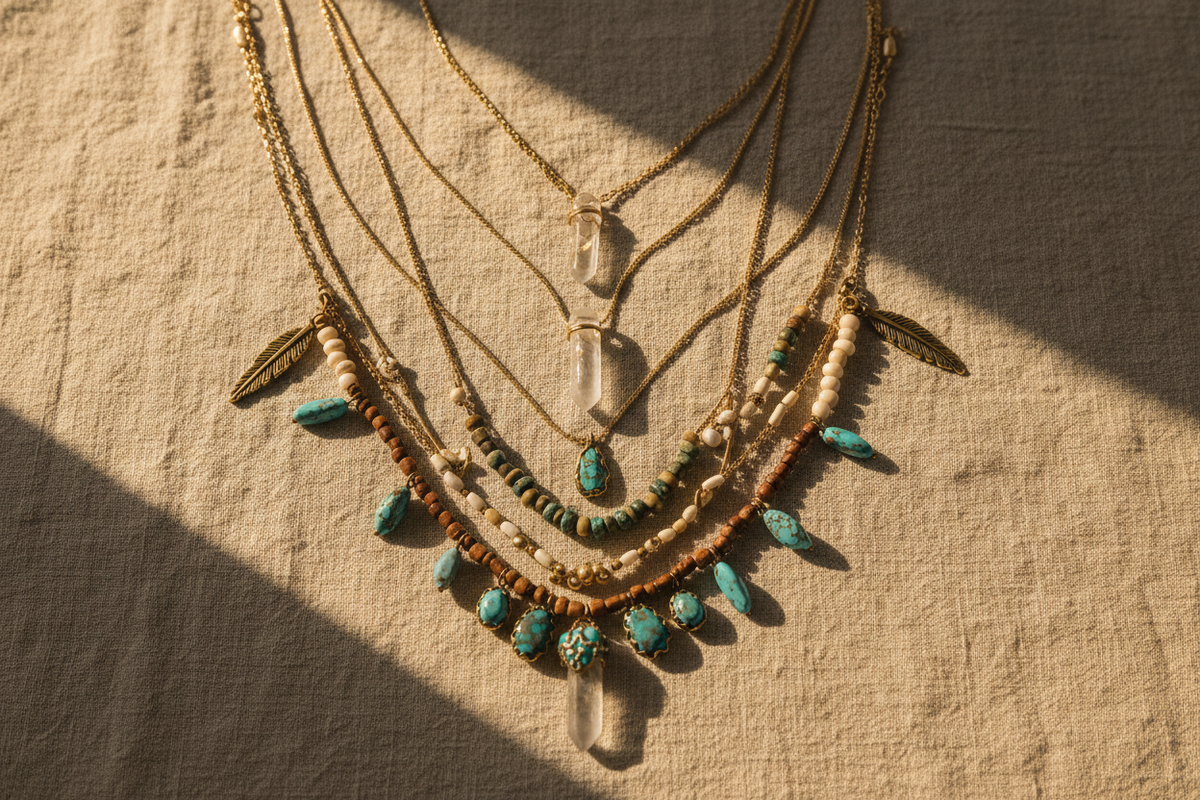
Layer it with metal. A shell strand alongside a fine gold or silver chain immediately reframes it. The contrast between organic and refined is what makes it modern.
Vary the length. Wear shell longer than choker height, or pair a short shell piece with a longer pendant.
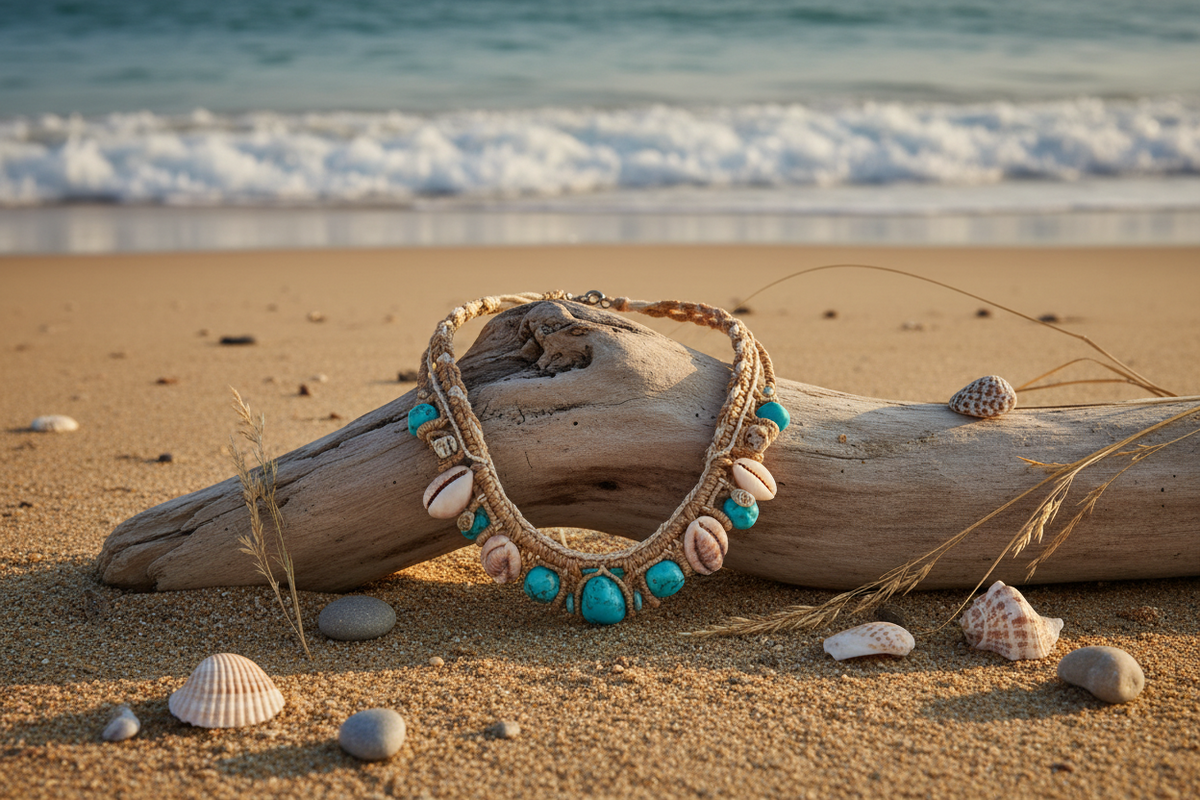
Mix in stone. Shell with turquoise or a natural stone pendant reads as considered rather than souvenir. Both materials are coastal, both are irregular, and they sit together well.
Let it be the texture, not the statement. Shell works best as one element in a stack rather than the whole outfit.
Caring for shell jewelry
Shell is calcium carbonate — porous and softer than most stone. It needs slightly more care than it looks like it does.
- Keep it away from perfume, sunscreen and hairspray, which dull the surface permanently
- Rinse with fresh water after sea swimming and dry fully; salt left to dry on shell degrades it
- Do not use ultrasonic cleaners or chemical jewelry dips
- Wipe with a barely damp soft cloth, then dry
- Store away from direct sun — prolonged exposure yellows white shell
Shell also dries out over years. A very light touch of mineral oil on a cloth, wiped on and buffed off, restores depth to a piece that has gone chalky.
Buying honestly
Ask whether shell is natural or cut. Neither is wrong. Cut shell gives you uniformity and a lower price; natural puka gives you irregularity and history. The problem is only when cut shell is sold as naturally eroded at a natural-puka price.
Browse our Puka Shell & Boho Beach collection, or see Boho Necklaces for chains to layer alongside shell.